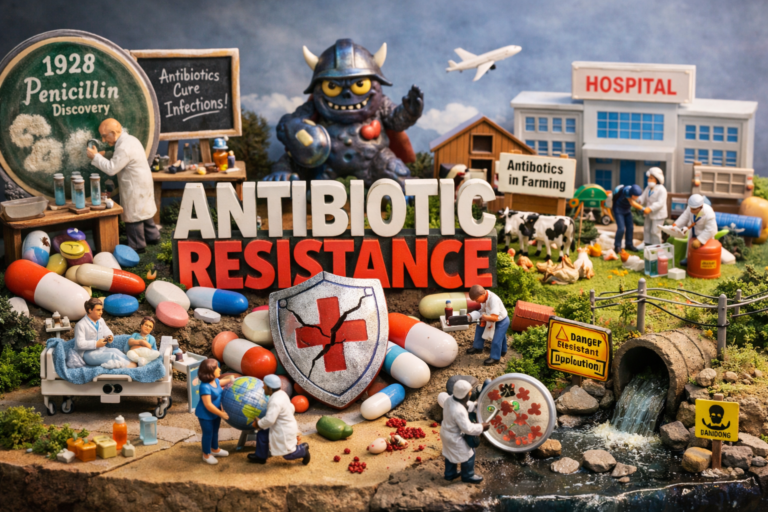
Antibiotic resistance is one of the most serious global health challenges of our time. Often called a “silent pandemic,” it is spreading quietly but rapidly, affecting humans, animals, agriculture, and the environment 🌍.
If urgent action is not taken, antibiotic resistance can undo decades of medical progress and put millions of lives at risk.
Through this blog on TouchHeights, we aim to spread awareness and responsibility among students and readers.
💊 What Are Antibiotics and Why Are They Important?
Antibiotics are medicines that kill or stop the growth of bacteria 🧫.
They have saved countless lives by treating diseases like pneumonia, tuberculosis, typhoid, and blood infections.
✨ Because of antibiotics:
- Life expectancy increased
- Surgeries became safer
- Fatal infections became treatable
⚠️ Important to remember:
Antibiotics work only on bacteria, not on viruses like cold, flu, or cough ❌🦠.
📜 A Brief History of Antibiotics
The modern antibiotic era began in 1928, when scientist Alexander Fleming discovered Penicillin 🔬.
This discovery revolutionized medicine and gave humanity a powerful weapon against deadly bacterial diseases. However, bacteria are living organisms that can adapt. Over time, misuse of antibiotics has allowed many bacteria to become resistant.
🧠 What Is Antibiotic Resistance?
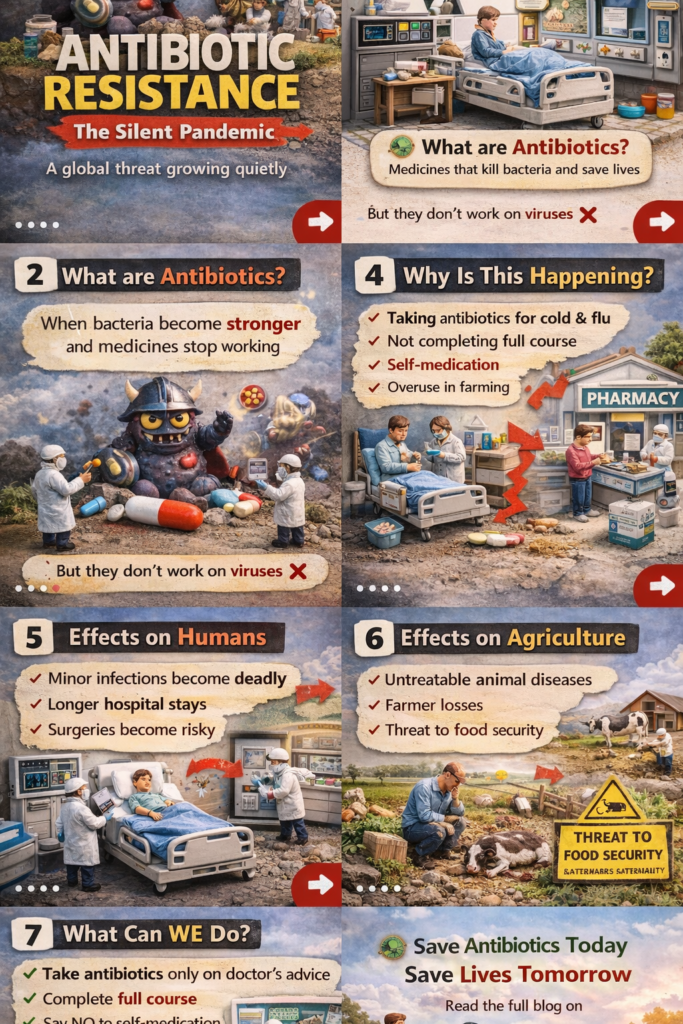
Antibiotic resistance occurs when bacteria change and become strong enough to survive antibiotics 💪🦠.
👉 The medicine stops working
👉 The infection lasts longer
👉 Treatment becomes difficult or impossible
In simple words:
Bacteria survive, but medicines fail.
⚠️ Major Causes of Antibiotic Resistance
🏠 1. Misuse in Daily Life
- Taking antibiotics for cold & flu 🤧
- Stopping medicines early
- Self-medication without doctor’s advice
🐄🌾 2. Overuse in Agriculture & Animal Farming
Antibiotics are widely used in:
- Livestock
- Poultry
- Dairy farming
These antibiotics enter our body through milk, meat, and eggs 🥛🍗🥚.
Animal waste used as manure contaminates soil and water, creating resistant bacteria that spread to humans.
💉 Commonly Misused Antibiotics
Some frequently overused antibiotics include:
- Amoxicillin
- Penicillin
- Azithromycin
- Ciprofloxacin
- Doxycycline
- Cephalexin
Overuse teaches bacteria how to survive, making future infections harder to treat ⚠️.
🚨 Effects of Antibiotic Resistance
The consequences are alarming and far-reaching.
🏥 Impact on Human Health
- Minor infections become life-threatening
- Longer hospital stays ⏳
- Increased medical expenses 💸
- Common surgeries become risky
🌾 Impact on Agriculture & Food Security
- Untreatable animal diseases
- Financial losses for farmers 👨🌾
- Threat to food security and sustainability
🌐 Why Antibiotic Resistance Is a Global Threat
Antibiotic-resistant bacteria spread easily through:
- Food 🍽️
- Water 💧
- Travel ✈️
- Human contact 🤝
That’s why antibiotic resistance is a global health emergency, not just a local issue.
✅ How Can We Prevent Antibiotic Resistance?
👩⚕️ What Individuals Can Do
- Take antibiotics only on a doctor’s advice
- Complete the full course 📅
- Never self-medicate or share medicines
🐓 What Farmers Can Do
- Avoid antibiotics as growth boosters
- Follow hygienic and sustainable farming practices
🏫 What Society Can Do
- Maintain cleanliness and sanitation 🧼
- Encourage vaccination 💉
- Practice safe food handling
- Spread awareness through education 📚
🌟 Conclusion: Save Antibiotics, Save Lives
Antibiotic resistance is not a problem of the future—it is a crisis of the present 🚨.
If antibiotics continue to be misused, even simple infections could once again become deadly.
Let us act wisely and responsibly today to protect human health, agriculture, and the environment 🌱.